
Don’t Let the Tax Year End Without Reading This
Mar 24, 2026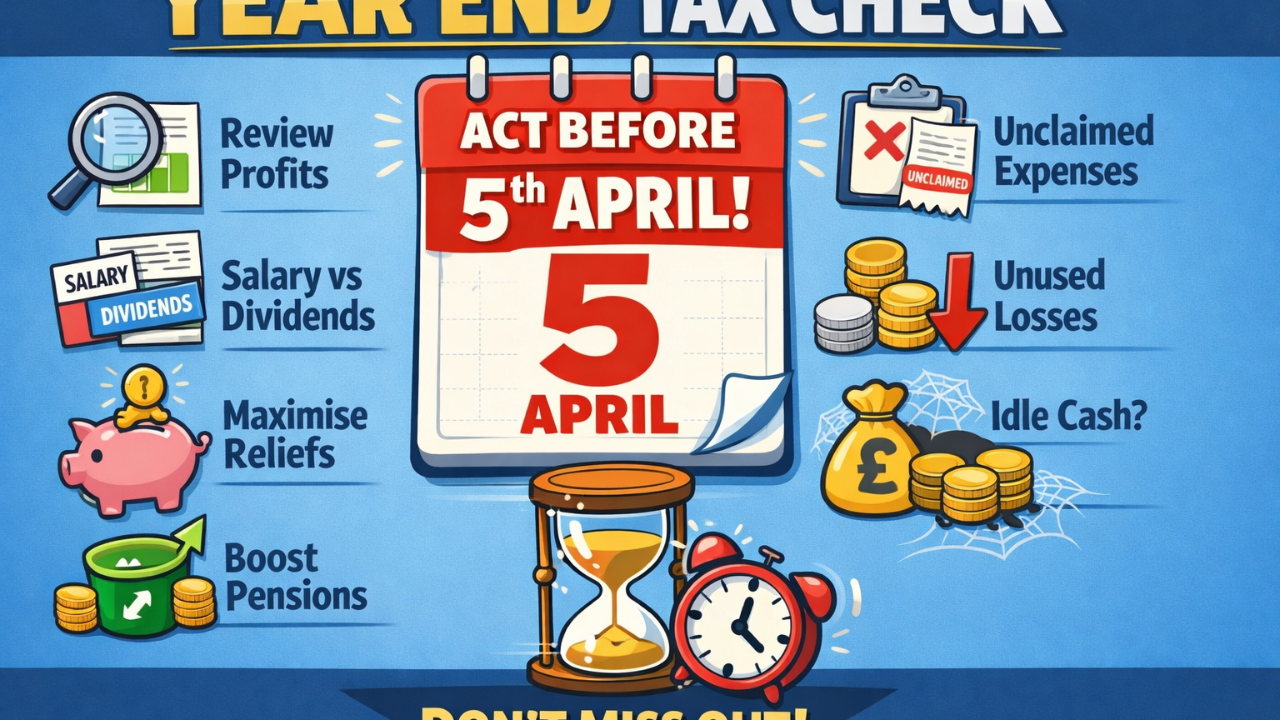
A quick health check for directors and business owners before 5 April
The 5th of April is coming.
For most business owners, it sneaks up fast — and by the time you’re thinking about it, the window to do anything useful is already closing.
I see it every year. Directors who leave it too late to look at the numbers, miss a handful of reliefs they were entitled to, and end up handing over more tax than they needed to.
This post is your reminder to act now — while you still can.
💼 Why the Run-Up to Year End Matters
The end of the tax year isn’t just a date in the diary. It’s the last chance to make informed decisions about your money before the rules reset.
Before 5 April, you can:
- Look at your profit and see whether it’s sitting in the right place
- Check whether your salary and dividend split is actually tax efficient
- Identify reliefs and allowances you haven’t used yet
- Move money into pensions, investments, or capital before the year closes
After 5 April? That window is gone.
💰 Director Salary vs Dividends — Are You Structured Right?
This is one of the most common things I review with clients, and it’s where a lot of money gets left on the table.
Most company directors take a mix of salary and dividends — but the split matters enormously.
A salary is subject to income tax and National Insurance (both employer and employee sides) — but it is a deductible business expense, which reduces your corporation tax bill.
Dividends are paid from profit after corporation tax and taxed at a different rate. There’s currently a £500 tax-free dividend allowance each year.
The most efficient structure depends on your personal tax position, what else you’re drawing income from, and what you’re trying to achieve. There’s no single right answer — but there’s almost always a better answer than the default.
If you haven’t reviewed your salary/dividend structure recently, now is the time.
🛠️ Business Reliefs Worth Checking Before 5 April
Here’s a quick run-through of the key business reliefs that are commonly missed:
- Full expensing — 100% first-year tax relief on qualifying new plant and machinery for limited companies
- Annual Investment Allowance (AIA) — deduct up to £1m on qualifying equipment from taxable profit (computers, machinery, fixtures and fittings)
- R&D tax relief — if you’re developing new products, services or processes, you may be able to claim. But please use a reputable specialist — the criteria are strict and a lot of businesses get it wrong
- Employment Allowance — eligible small employers can reduce their NIC bill by up to £10,500 per year
- Electric vehicle first-year allowance — 100% relief in year one on brand new EVs used for business
- Employer pension contributions — these are a deductible business expense and reduce your corporation tax. One of the cleanest, most efficient things you can do before year end
- Business rates relief — if your premises have a low rateable value, you may qualify for a reduction or exemption
📖 Personal Allowances to Check Alongside the Business
Your personal tax and your business tax are connected. Making smart decisions at company level without looking at your personal position is only half the job.
Before 5 April, make sure you’ve considered:
- Dividend allowance — £500 tax-free dividend income each year (use it or lose it)
- ISA allowance — up to £20,000 per year tax-free. Note: the cash ISA limit is being cut to £12,000 from April 2027, so if you’re planning ahead, factor that in
- Pension annual allowance — you can contribute up to £60,000 into your pension each year with tax relief
- Capital gains tax allowance — £3,000 in profit from selling assets before CGT kicks in
- Personal savings allowance — £1,000 for basic rate taxpayers, £500 for higher rate
- Marriage allowance — if one partner earns below the personal allowance, they can transfer up to £1,260 to their spouse
- Trading allowance — up to £1,000 from side work without paying tax on it
- Rent-a-room relief — if you rent out a furnished room, you can earn up to £7,500 per year tax-free
- IHT annual gift allowance — £3,000 per year you can gift without it counting toward your estate
⚠️ Common Oversights That Cost People Money
Beyond the reliefs themselves, here’s what I see businesses consistently miss:
- Unclaimed expenses — travel, software subscriptions, professional fees. If it’s not recorded, it’s not deducted
- Unused losses — if you’ve made a loss in a previous period, it may be offsettable against current profit
- Idle cash in business accounts — money sitting doing nothing when it could be working harder in pension contributions or capital investment
None of these are complicated. They just require someone to actually look.
💡 The Bottom Line
You don’t have to be a tax expert to make good decisions at year end. You just need to be proactive enough to have the conversation before it’s too late.
If you’re not sure whether you’re making the most of what’s available to you — or if you haven’t spoken to your accountant recently — now is the time.
Don’t let 5 April come and go and wonder what you could have done differently.
If you want the full picture — including the income danger zones, the pension changes coming in 2027, what MTD means for landlords and sole traders, and a complete action checklist — I've put together a free Year End Tax Briefing for 2025/26. It covers everything you need to know before 5 April, in plain English, with no jargon.
Download here!
📺 Want Business Advice You Can See in Action?
Subscribe to the AskJT YouTube channel for weekly videos on tax tips, time-saving tools, and strategies to grow your business — explained in plain English.
Want More Practical Business Advice?
Every Thursday, I send out a short, sharp roundup of the week’s best content: a podcast, blog, YouTube video, and a 60-second tip to help you grow.
No spam. No fluff. Just ideas that work.
